

The other day, someone asked me whether people still commission custom-made furniture nowadays, with Ikea around.
And the question stayed with me.
Because, when you really think about it, that question is very similar to others we rarely ask ourselves.
Why do we keep cooking, when fast food, frozen meals or ready-made food exist?
Why do our grandparents keep making those stews we love so much, especially when winter comes, even though there are much quicker alternatives?
And if we go a little further…
Why do we keep seeking, caring for and investing in long-lasting friendships and relationships, when we have social media, quick interactions or dating apps?
The answer, deep down, is always the same.
Because not everything in life should be solved in the fastest possible way.
We live in an age of immediacy.
Everything is fast, standardised and replaceable.
However, when it comes to the spaces where we live, work and rest, not everything should follow that logic.
Custom-made furniture is not a trend or a nostalgia for the past.
It is a conscious response to a different way of understanding the home.
Space is not standard (even if furniture is)
No two homes are the same.
Heights, proportions, light, circulation, real uses… and yet most furniture is manufactured to generic dimensions.
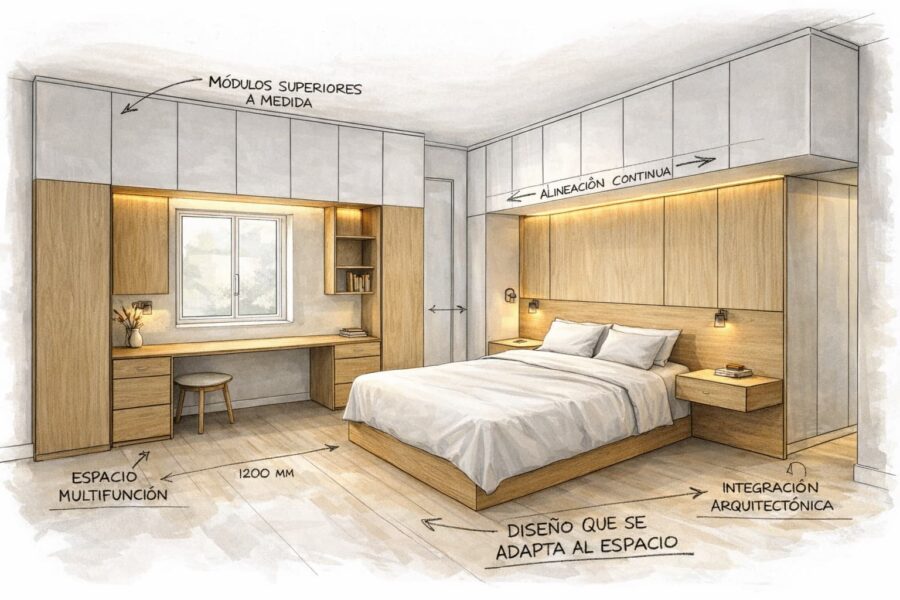
A custom-made piece starts from a simple idea: adapting to the space, not forcing the space to fit the furniture.
This results in better use of space, more natural circulation, coherent proportions and a sense of order and calm that is felt day to day.
Design is not decoration
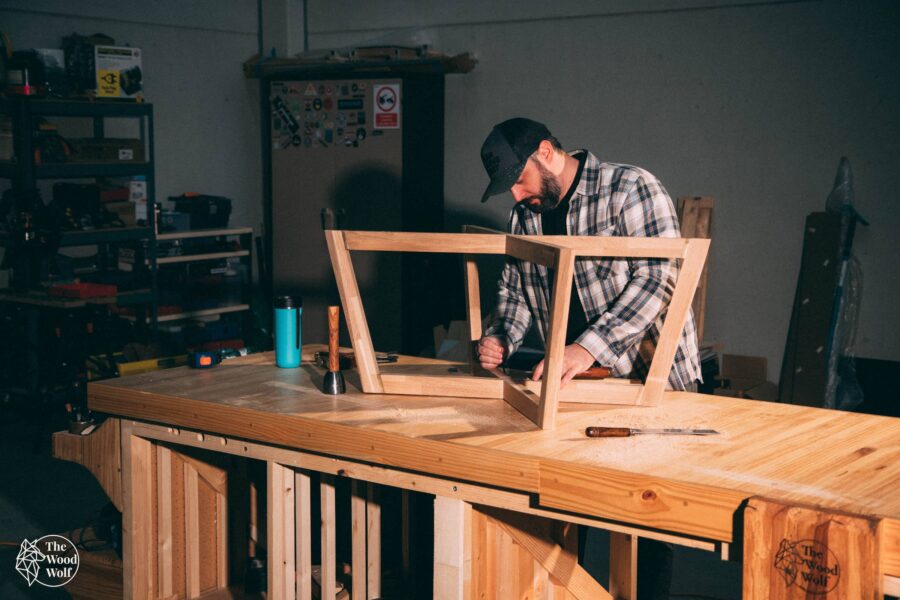
A custom-made piece does not start in the workshop.
It starts with thinking.
Design means making decisions:
what is stored, how it is used, who uses it and for how long.
It is not just about “looking good”, but about working today and still making sense ten or fifteen years from now.
That is the difference between a thoughtfully designed piece and one that is simply bought.
Chosen materials, not imposed ones
In standard furniture, the material is usually a direct consequence of price.
In custom-made furniture, the material is a conscious decision.
Solid wood, veneers, engineered boards…
each one has its place when used with criteria and knowledge.
The value is not in using the most expensive option, but in using what is most appropriate for each case, according to the real use of the piece and the context it will live in.
Durability over replacement
Replacing a piece of furniture every few years has a cost.
Not only economic, but also aesthetic, functional and environmental.
A well-designed and well-built custom piece is meant to age with dignity, allow adjustments or repairs, and accompany the life changes of the person who uses it.
Not to be replaced at the next move.
Furniture as part of the home, not just another object
When a piece of furniture is designed for a specific space, it stops being an isolated object and becomes part of the architecture of the place.
That is why some spaces feel coherent, balanced and truly their own.
Not because they have more furniture, but because every piece has a clear purpose.
Conclusion
For this reason, and returning to the initial question, the things that truly last are also the ones that generate memories, emotions and lived experiences.
We all remember our grandparents’ table.
That table that endured so much wear.
Gatherings, long meals, conversations, laughter, silence.
Or that piece of furniture we still keep at home, or would like to preserve as an inheritance.
Because when a piece of furniture is well thought out and made to last, it stops being just an object.
It becomes part of the life that happens around it.
Memories are not born from what is fast or replaceable.
They are born from what remains, adapts to the passage of time, and quietly becomes part of the home.
And that is why, yes.
People still choose custom-made furniture.
They do so with excitement, intention, and the hope that this piece will accompany a lifetime… and one day move on to other hands, another home, carrying with it all the memories it helped create.
At The Wood Wolf, we believe in furniture that lasts,
because we believe in the stories that are built around it.
Design with soul, character and purpose.