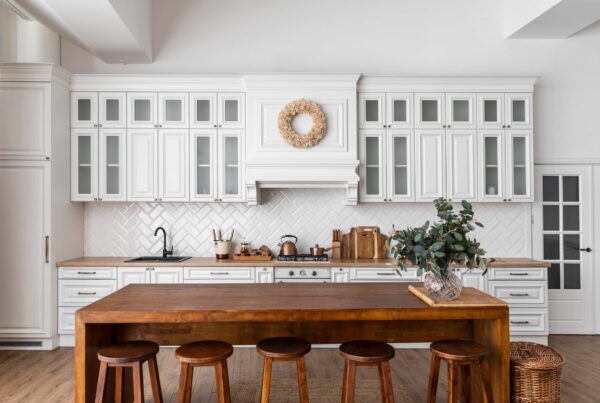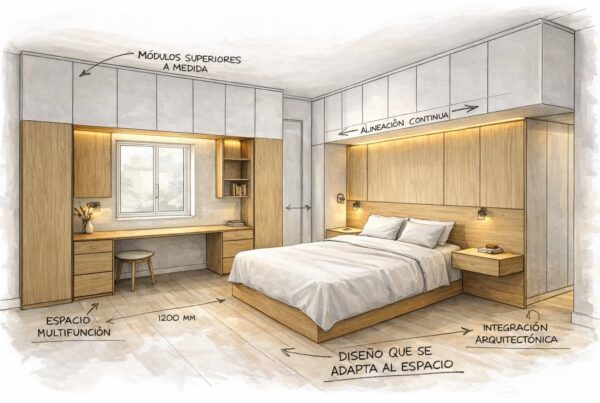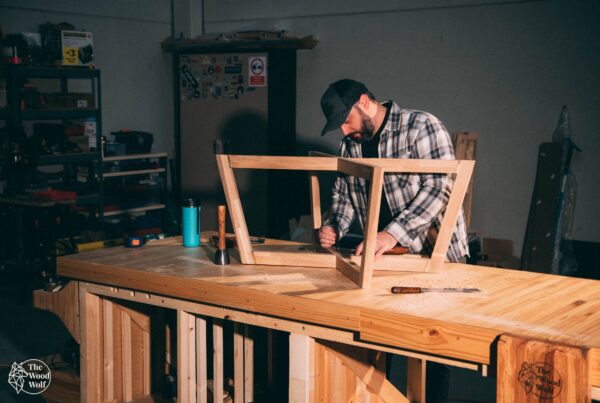


When it comes to custom furniture, one of the first questions is usually about the material.
Solid wood, MDF, veneer…
And almost always the same idea appears:
“Solid wood is the best.”
The reality is a bit more complex—and much more interesting.
In custom furniture, there are no materials that are good or bad by definition.
There are well-thought-out decisions, and decisions made without real criteria.
Solid Wood: When It Makes Sense
Solid wood is natural wood throughout its entire thickness.
It is a noble, living material, full of character — and also with its own demands.
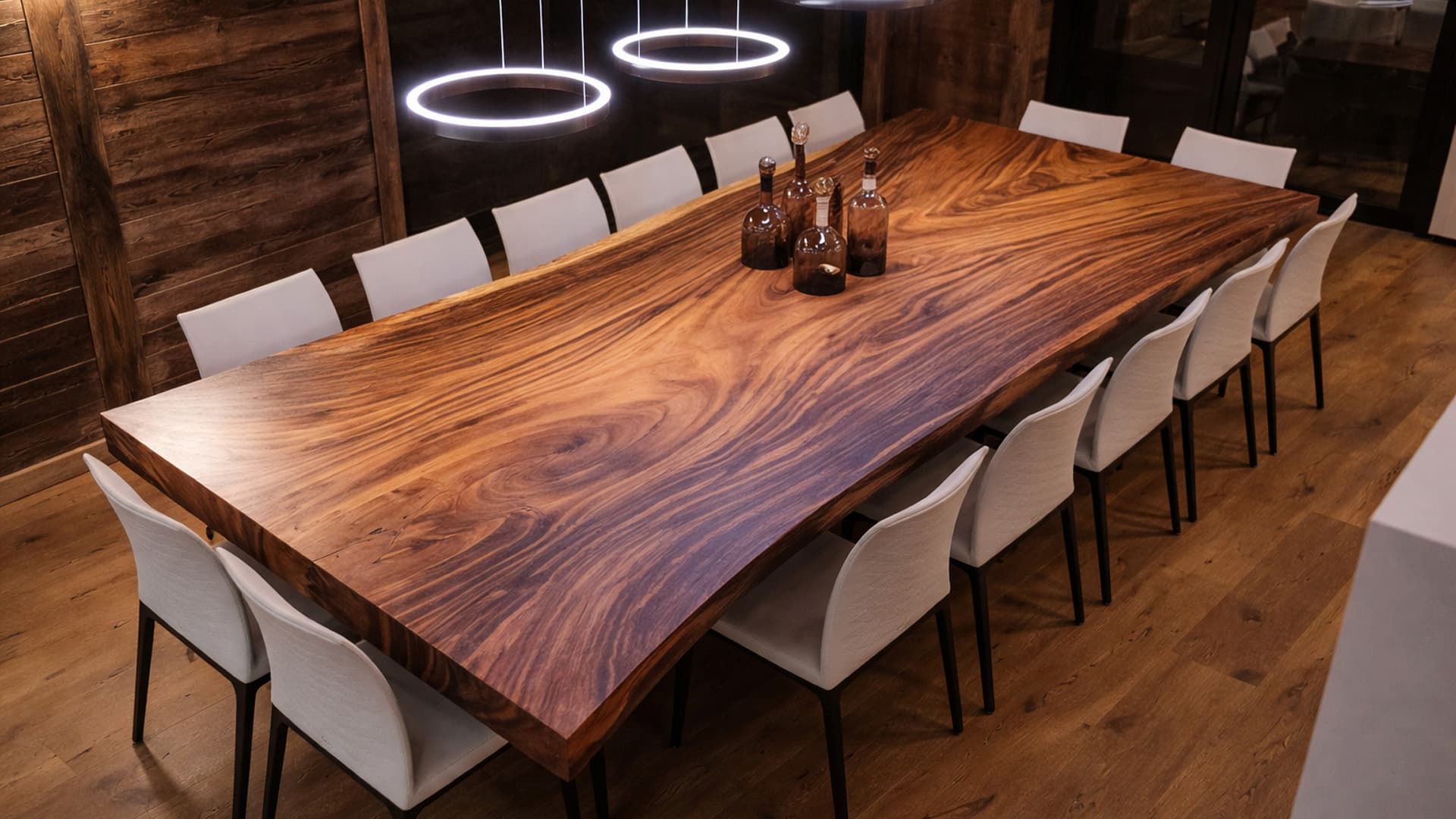
It works especially well for tables, counter-tops, benches, structural elements, and pieces designed to age with use.
Its main virtues are durability, the possibility of repair, and the way it ages over time.
But there is something fundamental to understand: solid wood moves.
It reacts to humidity, temperature, and the passage of time.
Because of this, there are designs and solutions that do not work well in solid wood.
Not because it is a worse material, but because it is a living material with greater movement.
Large fronts, very tight tolerances, precise geometries, or surfaces that must remain perfectly stable perform better with MDF or veneered panels.
Choosing a technical board in these cases is not giving up on quality.
It is about understanding how the material behaves and designing accordingly.
A good example of this can be seen in the work of Pedulla Studio, one of the contemporary cabinetmaking studios that has influenced me the most.
In many of their projects, especially when working with very tight tolerances or continuous surfaces, they use MDF veneered with natural wood.
Not as a shortcut, but because they know that, in certain areas, stability is more important than the material itself.
MDF: Stability and Precision When Finish Matters
MDF is a technical board made from wood fibers.
For years it has been unfairly associated with “cheap material,” when in reality it is a highly precise technical tool.
It is especially suitable for lacquered fronts, doors, clean and contemporary designs, and surfaces where stability is key.
It allows for very controlled finishes and a high level of precision.
When used correctly, MDF is not a shortcut.
It is a conscious decision in service of the design.
Veneer: The Smart Balance
Veneer combines a technical core with a layer of natural wood on the surface.
Visually, it is wood; structurally, it is stable.
It works especially well in wardrobes, bookcases, and large-format furniture.
It allows for visual coherence, greater stability, and more efficient use of material, while maintaining the presence of natural wood.
More Materials, Same Principle
There are many other materials used in furniture making, each with its advantages, limitations, and contexts of use.
In custom furniture, the key is not listing them all, but understanding which ones are most commonly used and how they behave over time.
Solid wood, MDF, and veneer are, in practice, the most commonly used materials in well-designed custom projects, precisely because they allow a balance between aesthetics, stability, durability, and technical control.
Criteria Matter More Than the Material
In standard furniture, the material is usually a direct consequence of the price.
In custom furniture, the material is a conscious decision, based on real use, the space it will live in, who will use it, and how it should age over time.
Good furniture does not start in the workshop.
It starts with intention.
Conclusion
Well-designed furniture is not meant to be replaced every few years.
It adapts, can be repaired, and evolves with life’s changes.
When a piece is designed for a specific space, it ceases to be an isolated object and becomes part of the home.
And that is why.
People still commission custom-made furniture.
Not because of the material itself, but because of the criteria, the design, and the intention behind every decision.
At The Wood Wolf, we believe in furniture that lasts, because we believe in the stories built around it.
Design with soul, character, and purpose.