

We live in a world that moves at a frantic pace. Everything seems designed to arrive as soon as possible, to finish quickly, to move on to the next point without looking back too much.
The workshop, however, operates under different rules.
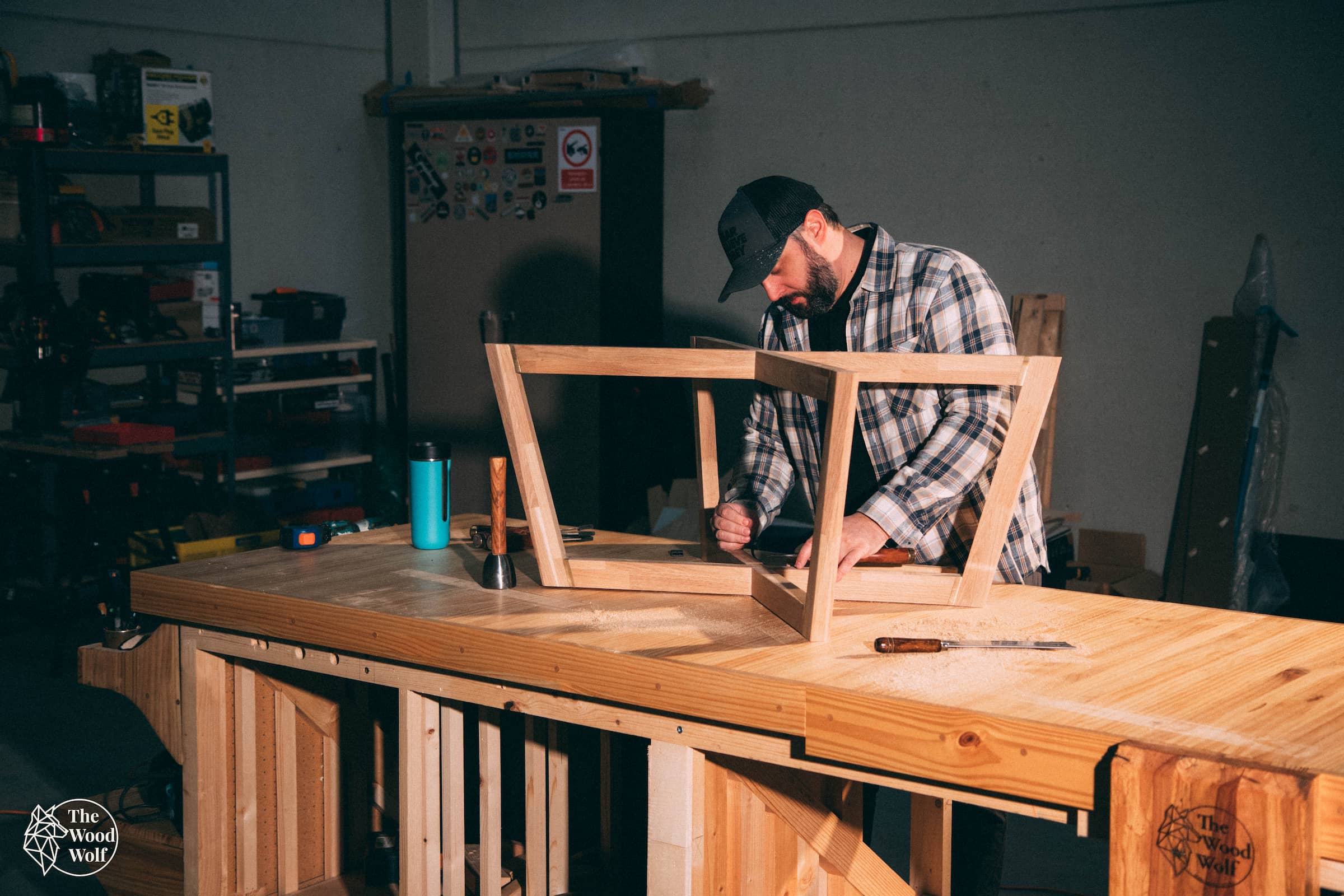
After years of working with wood, I have learned that it is not just a material. Above all, it is a silent teacher. One that does not speak, but teaches with every mistake made due to lack of patience.
A Pact with Time
Working with wood is not an act of domination. It is a constant negotiation.
From the first cut to the last finish, a kind of invisible contract is established between the craftsman and the material.
The wood allows you to cut it, sand it, assemble it, and shape it as you wish. But there is a immovable condition that does not allow discussion: the rhythm is not negotiable.
We can propose the design, choose the tools, and define the final result. But it is the wood that sets the pace of the work. Ignoring that rhythm always has consequences.
The Trap of the Near Finish
One of the hardest lessons occurs during the final steps of a project.
After hours—or days—of sanding, adjustments, and checks, the temptation to accelerate appears. Apply the oil as soon as possible. Finish the furniture and move on to the next project.
However, it is precisely at this moment of haste where the greatest danger lies.
When you try to rush, the wood responds. A poorly applied finish, a surface that was not ready, a detail overlooked. And then the inevitable happens: you have to go back. Return to the exact point where calm was lost and start again.
In the workshop, haste does not save time. It destroys it.
Honesty with the Client
This way of working does not stay on the workbench. It extends to the relationship with the client.
As artisans, we have the responsibility to explain that quality needs time. That when a deadline is defined, it is not an excuse or a way to postpone an order because there are other projects in progress. It is a real need of the process.
Respecting the times is not a matter of availability. It is a matter of respect: towards the material, towards the craft, and towards the final result.
A Lesson That Goes Beyond the Workshop
Over time, one realizes that wood not only teaches you to work better. It teaches you to live better.
Accepting that we cannot always impose our speed on things helps us to distinguish when it is time to move forward quickly and when it is necessary to stop. Listen. Adjust.
The wood reminds us that working at its pace is not a limitation. It is the only way for things to turn out well and last.
In the end, patience is not about waiting without doing anything. It is about maintaining the right pace while the work transforms into something that deserves to endure.